
Build a Backward Jackson County Owner Timeline
A backward search works best one transfer at a time. Match the legal description at each step. The date ranges below come from the State Archives finding aid. They describe holdings rather than confirmed online access. Keep the Clerk's current index apart from the historical film runs in your notes.
| Backward step | Known range | Jackson County source | What to match |
|---|---|---|---|
| Latest deed to the present grantee | Online cutoff not stated | County Clerk | Grantor, grantee, record date, land description |
| Earlier grantee entry for the grantor | Index 1831-1968 | Clerk and State Archives finding aid | Same tract and prior transfer reference |
| Deed book for an earlier transfer | Jackson books 1836-1901; first volume missing | Clerk and microfilm | Book, page, parties, description |
| Separate older filmed run | Deeds 1789-1900; index to 1935 | Virginia State Library filming listed by Archives | Names and tract calls across source sets |
Use the newest Clerk deed first. Work from its grantor toward earlier owners. For a nineteenth-century transfer, compare the index against the surviving book or film before assuming the chain has ended. Survey and plat records can confirm that an old tract and a present parcel describe the same land.
Trace a Jackson County Grantor Back to a Grantee
Earlier owners emerge when you move backward from the current deed's grantor. Check the legal description at each step. Names change; the tract should not. The County Clerk's pages list deed categories and fees, but they do not give the live index fields or the online start year.
- Find the latest deed in which the current owner is grantee and copy its full legal description.
- Read the grantor, date, deed type, book/page or reference, and any parcel clue.
- Search that grantor as an earlier grantee, then compare the land description again.
- When the online range ends, switch to the Archives index, deed books, or a filmed source set.
- Grantor / grantee
- The party conveying an interest and the party receiving it in a deed.
- Chain of title
- The ordered sequence of deeds and related recorded instruments that explain transfers of a parcel.
- Legal description
- The written land boundary or lot reference used to match a deed with the parcel.
Jackson County's First Deed Volume Is Missing
Jackson's surviving deed books open in 1836. The first volume was meant to start in 1831. Its loss leaves a gap between intent and record. The deed index does begin in 1831, so a name can appear there without a surviving first volume behind it. Treat this as a hole in the record set, never as proof that a tract lacked an earlier owner. The West Virginia State Archives finding aid names the county's deed and index holdings.
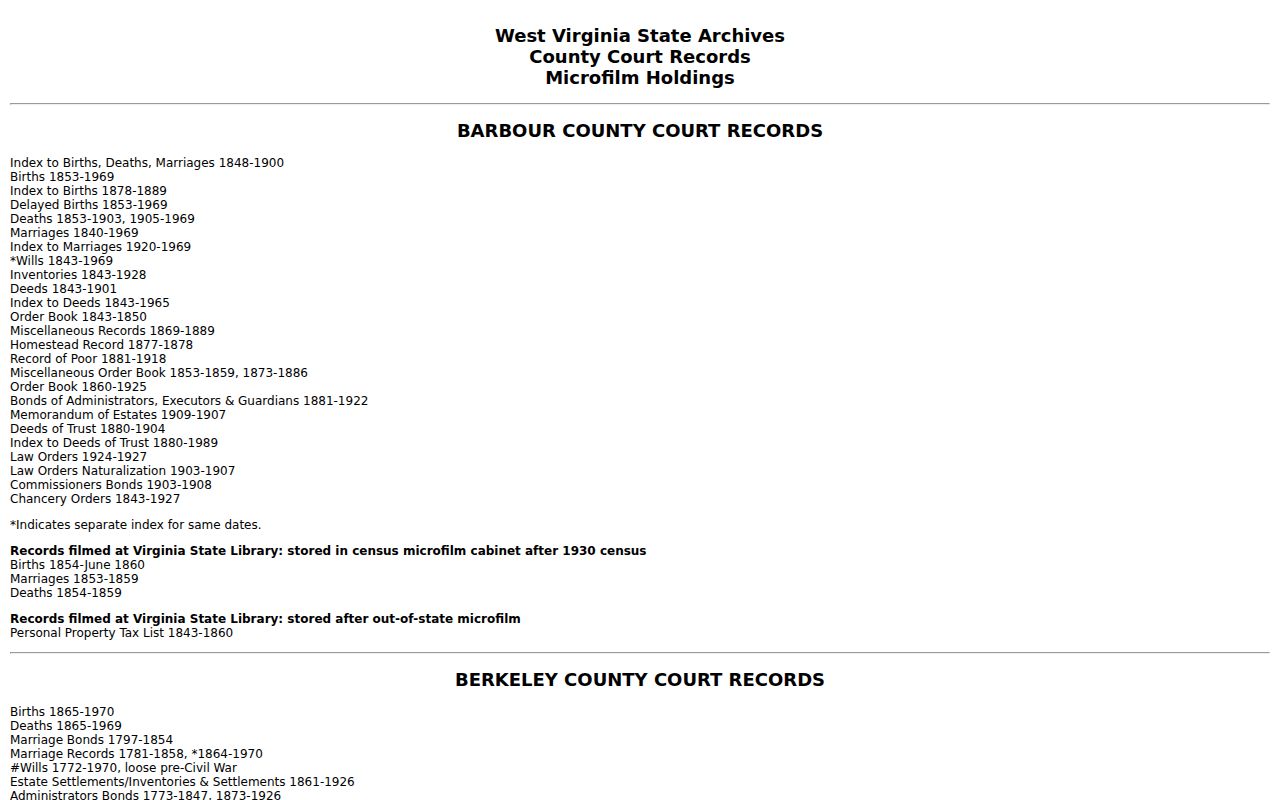
Use it to identify the right book or film, then note the gap in any ownership timeline.
Older Jackson County Film Runs Are Not One Index
The county deed indexes run 1831 to 1968. Separately, Virginia State Library filming holds deeds from 1789 to 1900 with an index running through 1935. The runs overlap. They are not identical. A chain that stalls in one index may resume in another film set, so record the exact source, year span, and index direction you used. Jackson deeds also connect to trust-deed indexes, release indexes, surveys, fiduciary records, wills, and delinquent-land materials. Cross these when an estate or lien was involved.
Jackson County Plats Help Match an Older Tract
The Archives lists Surveyor's Plat Books, 1859 to 1939. Surveys run from 1831 to 1890. Together they link old descriptions to later map references. City parcels call for one tactic. Search the deed's lot and block against the recorded plat. For rural land, preserve each course and adjoining owner named in the metes-and-bounds description. The Clerk records plat maps and lists a $12 fee. A plat or survey aids tracing; it does not replace a current boundary survey.
Probate Explains Some Jackson County Owner Changes
Probate often explains a deed naming an executor, administrator, guardian, or heir. Jackson County's Clerk keeps the wills, estates, guardianships, and heir notices. The Archives finding aid adds depth. Its wills run from 1804 to 1967, with an index from 1831 to 1967, plus fiduciary records, lists of heirs from 1907 to 1935, and estate records from 1840 to 1861. Pair each probate file with its deed. State death records follow separate rules, opening identifying information after 50 years with statutory redactions. An obituary can point to the right name. But only the recorded transfer establishes ownership.
Jackson County's Deed Books Are Marked Preserved
The statewide deed-preservation project began in 2011. It digitizes deed books for county clerks. Jackson County is marked complete. That status is a preservation record, not proof that every image sits online in one free viewer, so ask the Clerk how to consult local digitized books and ask the Archives about microfilm or reproduction access. The Statewide Preservation Project county list records Jackson's completed status.
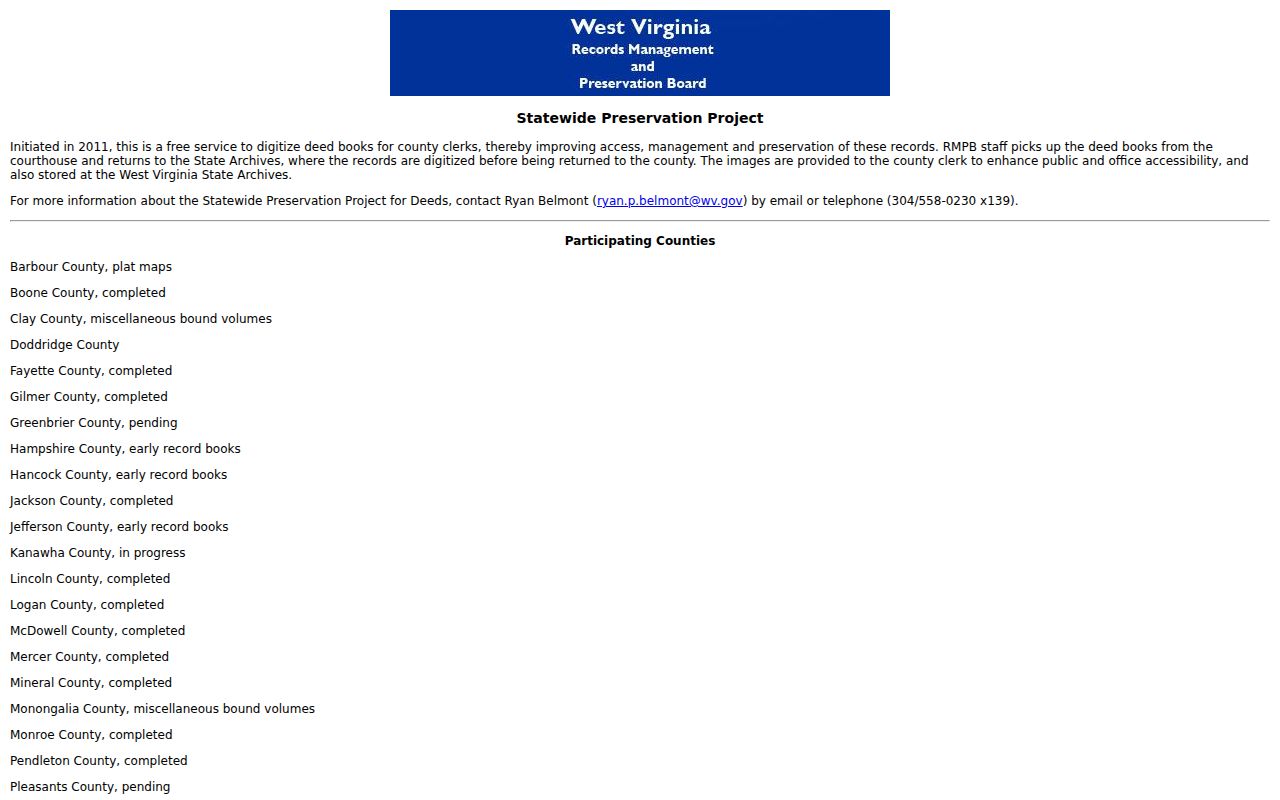
Cite the medium you used. Then the next researcher knows whether an entry came from book, film, or digital copy.
Jackson County Obituaries and Library Files Add Name Clues
The Jackson County Historical Society keeps more than 10,900 obituaries. It welcomes local research questions. The Public Library has branches in Ripley and Ravenswood. Its genealogy and history resources include Ancestry Library Edition. Its files can connect a person to a family, residence, or estate before a deed search. The Society's local history and obituary page is a focused county resource.
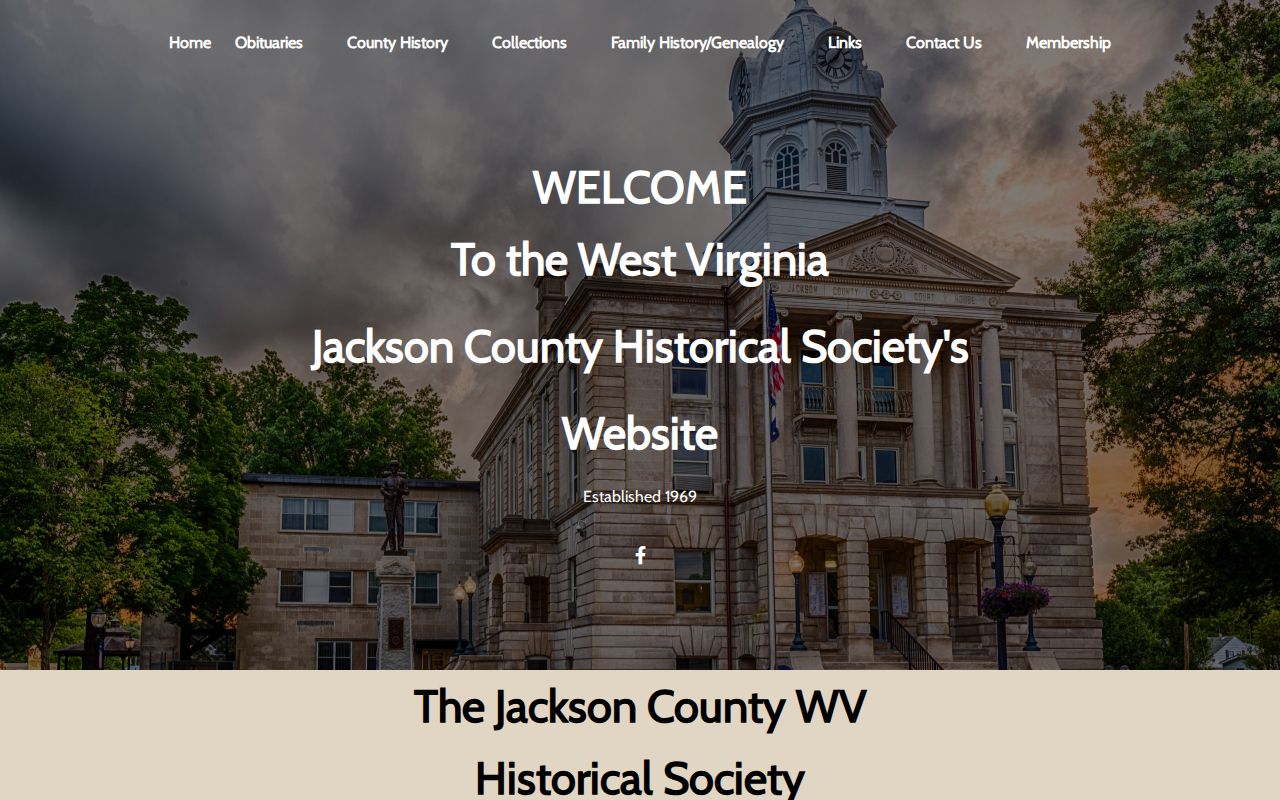
An obituary name is a lead, not a landing. Use it to locate a probate or deed file. Then confirm each transfer in the recorded land record itself. The Jackson County Public Library genealogy and history resources offer another path for checking a name before the deed index.
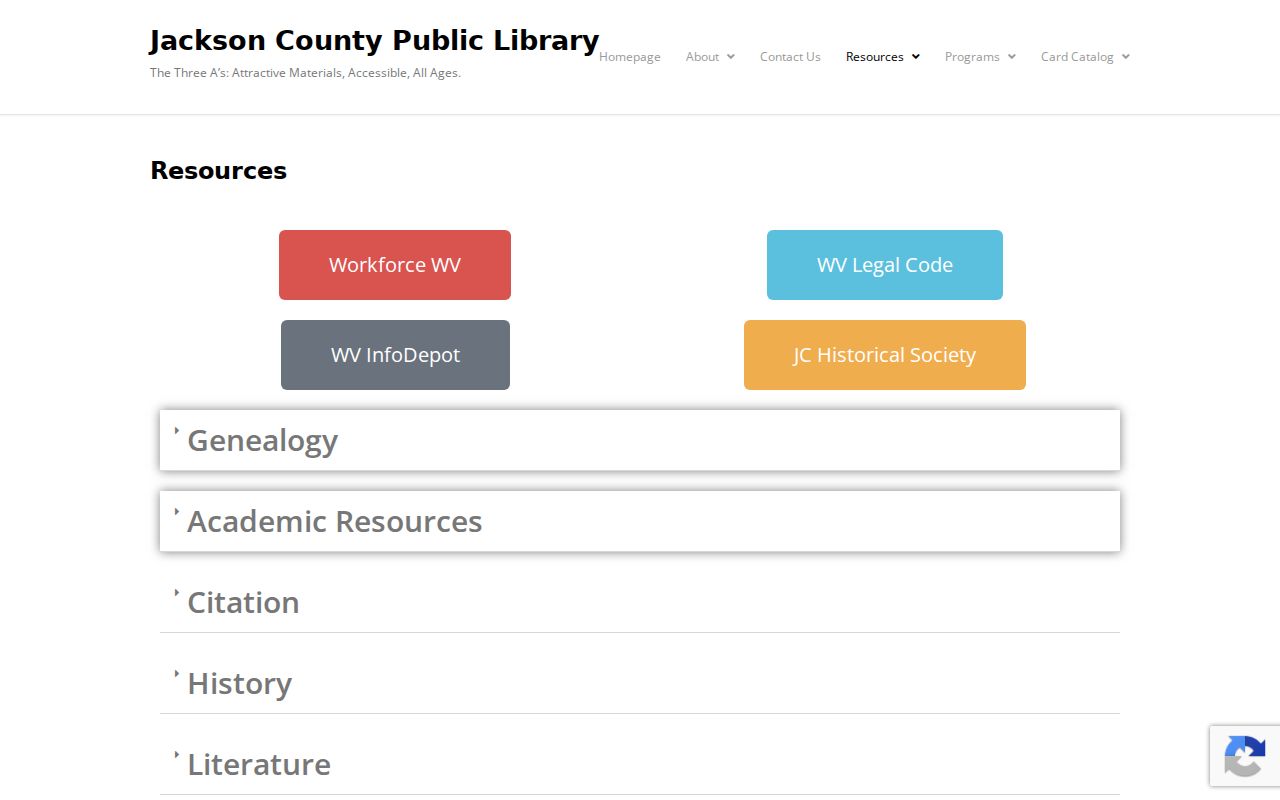
Library genealogy resources yield family clues. But a recorded conveyance or estate file still establishes the property transfer.
How Deep the Jackson County Deed Trail Runs
Jackson County's paper trail reaches back nearly to its founding. The Archives holds a deed index covering 1831 through 1968, alongside county deed books spanning 1836 to 1901. One gap stands out. The first book, which opened in 1831, is missing from the holdings. A separate filming by the Virginia State Library goes deeper still, capturing deeds from 1789 through 1900 with an index reaching to 1935. These spans describe what sits in archives and on film, not the range a person can search through the current County Clerk's online system, so older links in the chain call for archival legwork rather than a quick parcel lookup.
Coverage note. The Clerk's public pages do not state an online index cutoff. Ask the Clerk where its current search ends, then use the Archives finding aid for older indexes and books.
Record Jackson County Sources Along the Chain
A sound former-owner timeline names its source at every link in the chain. Write down the index name and instrument date. Add the book and page or other reference, grantor, grantee, and legal description. Note where each entry sits. It may be in the current County Clerk route, a State Archives index, the surviving county deed books, a separate film run, or a probate file. That source note turns a gap into something visible, rather than a silent assumption.
An earlier grantor sometimes appears in an estate or fiduciary file instead of a deed book. Follow the authority named in that record. Then look for the deed that later conveys the land. The Archives holds will records from 1804 through 1967. It also keeps an index running from 1831 through 1967 and additional fiduciary and heir materials. These holdings can explain a name change. They can also clarify a representative's role. Even so, every change in ownership still needs tying back to the parcel's legal description.
Keep an index entry separate from the deed image itself. A careful citation records the finding-aid collection name. Add the volume or film number, date span, and any gap, such as the missing first deed volume. An instrument may cite a plat or survey. Carry that citation forward rather than forcing the historical description into a guessed modern address. The result is a narrower archival request and a chain whose weak links are plain to see.